
① As multiple VLCCs and LNG carriers resume transiting the Strait of Hormuz, market confidence in the recovery of Middle East energy transportation continues to strengthen, with Brent crude falling below $75 for the first time since the outbreak of the Iran war.
② Although uncertainty remains over US-Iran negotiations, the recovery of shipping, expectations of normalized Qatari LNG production, and rising domestic anti-war pressure in the United States have already driven the market to price in an early “end of the war.”
June 24 — Beijing time Wednesday evening, Brent crude oil futures fell more than 3% intraday, breaking below $75 per barrel for the first time since the outbreak of the Iran war.
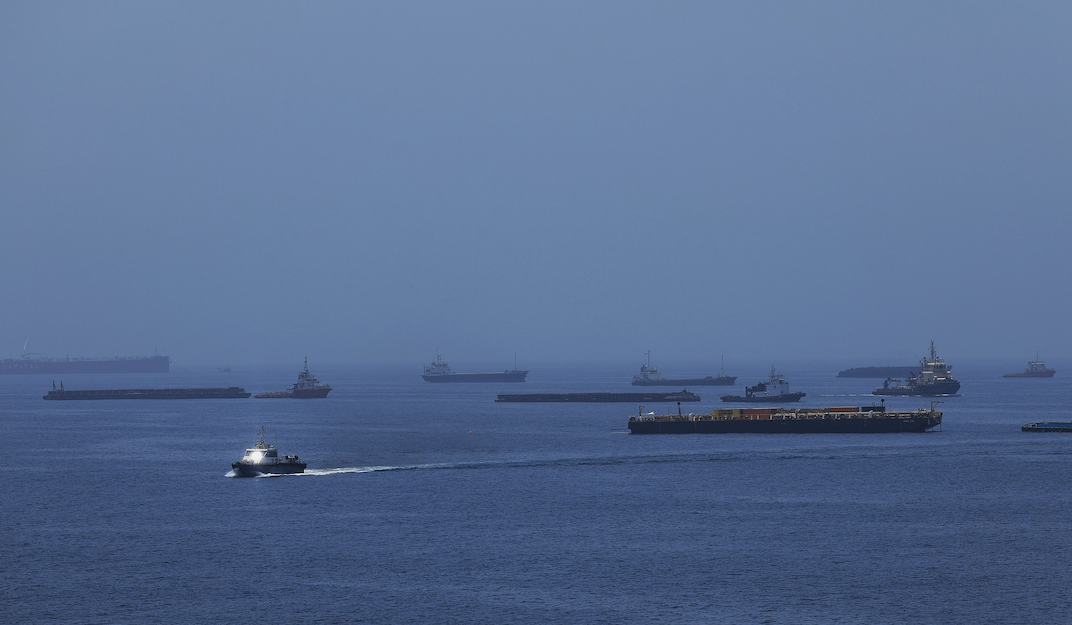
On the news front, over the past several days, VLCCs have continued to transit the Strait of Hormuz with satellite signals activated, indicating that shipowner confidence is strengthening. The International Maritime Organization also disclosed that it has received safety assurances and will cooperate with Iran, the United States, and regional countries to coordinate the evacuation of 11,000 seafarers stranded in the Persian Gulf.
In terms of shipping, data from Kpler and LSEG show that three stranded tankers loaded with 5 million barrels of crude oil began their voyage out of the strait on Wednesday. Among them, the South Korea-flagged VLCC “VL Breeze,” carrying 2 million barrels of Qatari condensate and Abu Dhabi crude, is heading to Daesan Port in South Korea. The VLCC “Plata Carrier,” chartered by Indian Oil Corporation, is also carrying 2 million barrels of Saudi crude to India.
Meanwhile, two empty liquefied natural gas (LNG) tankers have transited the strait to Qatar for loading, bringing the known number of empty LNG carriers passing through the strait to Qatar for loading to nine.
Qatari Prime Minister and Foreign Minister Mohammed also said in a media interview published on Wednesday that the world’s major LNG exporter expects to restore normal LNG production within weeks. In addition to LNG, Qatar is also the world’s largest helium exporter and the second-largest urea exporter.
The International Energy Agency also reported on Wednesday that even before the US-Iran memorandum of understanding was signed, the UAE’s oil exports in early June had recovered to 85% of pre-war levels.
Although the ongoing negotiations between the United States and Iran appear unlikely to produce rapid results, the entire market has already begun pricing in an “end of the war” or a “sustained ceasefire.” With Brent crude falling below $75, international oil prices have retreated nearly 40% from their March highs.
At the same time, the US Senate, controlled by Republicans, passed a resolution on Tuesday limiting the president’s war powers, requiring President Trump to end military operations against Iran and to obtain congressional authorization before taking future military action against Iran.
The resolution had previously been passed by the House of Representatives.
The resolution clearly demonstrates how little support the Iran war has within the United States. Trump, who is approaching the midterm elections, has also shifted his focus to U.S. inflation. In a social media post, he stated that he has ordered the Department of Justice to investigate why gasoline prices have not fallen faster as crude oil prices decline. According to American Automobile Association data, the national average retail price has dropped 14% since late May and fell below $4 per gallon on Tuesday, though it remains above the historical average for the same period. The U.S. retail diesel price also fell below $5 per gallon on Wednesday, the first time since mid-March.
